



What is bruxism?
Bruxism is a condition characterized by teeth clenching, pressing, or grinding. It can occur during sleep or while awake. There is no age limit for this condition; it can affect many age groups. Bruxism treatment depends on the patient's symptoms, the severity of the pain, and the underlying psychological factors. Because it can lead to serious long-term consequences, diagnosis, appropriate planning, and treatment of bruxism are crucial.
Contents

Bruxism refers to the clenching of teeth, and the sound produced by excessive clenching. While it often occurs at night during sleep as the day's fatigue subsides, it can also be seen during the day in a hectic environment. Generally, patients are unaware that they are clenching or grinding their teeth. Those around them may hear the sounds. Teeth grinding is the rubbing of teeth against each other, while teeth clenching is the tight holding of the teeth together and the resulting muscle tension.
There are some key differences between teeth grinding during the day and at night.
Bruxism can quickly cause various pains such as jaw pain, jaw clenching, inability to open the mouth, muscle stiffness, and headaches. In the long term, it can lead to restricted jaw movement, difficulty opening and closing the mouth, jaw displacement, and tooth and gum loss.
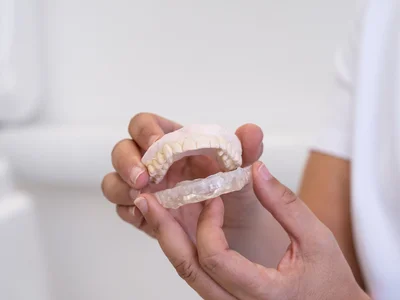
After an examination by a specialist physician and the subsequent planning process, treatment methods such as night guards and splints can be applied to address issues such as worn enamel, flattened teeth, broken or cracked teeth, flattening of fillings and teeth, and jaw muscle tension, thereby resolving the problem.
These processes and procedures are aimed at preventing and avoiding damage to the teeth.
What are the symptoms of bruxism?
- Loud and noisy teeth grinding during sleep
- Jaw locking
- Severe toothache
- Tooth wear
- Tense and locked jaw joint pain.
- Neck, face, and jaw pain
- Pain radiating to the ear
- Headache
- Stress
- Sleep disorder
What are the long-term effects?
- Enamel erosion, sensitivity.
- Gum recession
- Cracking and breaking of teeth
- Flattened teeth
- Tooth extractions
- Inability to use teeth properly
- Jaw and joint pain, and difficulty chewing may occur.
Bruxism Treatment Method
Bruxism treatment varies depending on the type of bruxism and the treatment method used. These include:;
Drug Treatment: This treatment method may be recommended to relieve pain and swelling, and to relax muscles. Jaw muscle tension or pain can be relieved. Relaxation – tension is reduced.
Teeth grinding device – night guard – splint: This treatment method is a procedure performed by taking measurements specifically for each patient. It is made from either soft or hard material depending on the difficulty of the compression.
Botox: While not a permanent solution, it is a treatment method involving repeated sessions for patients with severe bruxism.
Treatment depends on the underlying cause of the compression: Stress, anxiety, and mental health also play a role in the treatment of bruxism.
What can be done to prevent bruxism?
- Consume as little alcohol, cigarettes, and caffeine as possible.
- To prevent tooth wear and tear on the jaw joints, avoid chewing gum, jelly candies, and Turkish delight – things that are difficult to chew.
- Applying a warm compress to prevent severe pain and muscle spasms.
- Trying ways to reduce stress or manage stress.
- Do not hesitate to seek external expert support when deemed necessary.
- Breathing exercises – relaxation techniques can be applied.