




Frequently Asked Questions About Whitening (Bleaching)
This is an aesthetic procedure that helps achieve a cleaner appearance for teeth with dark stains and yellowing caused by habits that can discolor the tooth surface and damage the tooth enamel (such as smoking, coffee, tea, acidic drinks, etc.).
Before Whitening
Peak: First, the patient's dental health and the condition of their tooth enamel are assessed. This assessment is carried out by our specialist dentists. The condition of the tooth enamel and gum tissues are checked. If whitening is deemed appropriate;
The patient undergoes an assessment phase, their expectations are discussed in detail, and the doctor's predictions are shared as the course of action.
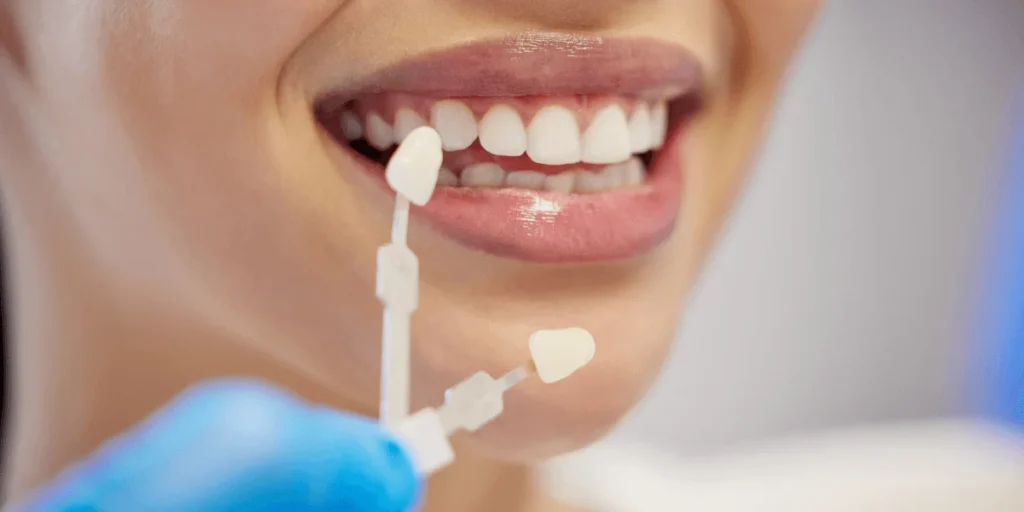
Colour: Our dentists determine the level of whiteness that can be achieved using measuring devices or color scales, taking into account the condition of the teeth.
Dental hygiene: Tartar and dental plaque, which are found on the surface of teeth, must be removed. This is one of the steps that should be taken to prepare the tooth surface for whitening and to ensure that the whitening process is more effective.
Office Whitening
If there is no sensitivity or gum bleeding after teeth cleaning, the whitening process is started on the same day. The whitening procedure, which can be performed in a sterile environment (clinic), involves the application of a special gel to the tooth surface by dentists with utmost care and precision. Sessions are conducted under the supervision of a doctor using blue light (laser). After the first session, the patient rests, and after a break, the second session is applied.
Home Whitening
It can be applied at home upon the patient's request. Our physicians can perform the procedure at home using personalized whitening kits and trays. Unlike office-based whitening, it doesn't necessarily require a clinical setting. Patients can divide the treatment process into sessions as they wish and undergo the treatment in the comfort of their own homes.
At-home teeth whitening can take longer than in-office whitening, usually taking a few weeks to complete. Despite the slow treatment process, effective results can be achieved. The gels and trays provided for at-home teeth whitening must be used daily. While availability varies depending on the clinic, you can obtain them from medical facilities under the supervision of a dentist.
After whitening: Sensitivity to hot and cold foods may occur. A tingling pain may be experienced, but it is nothing to worry about. The sensitivity and symptoms usually subside after a few days.
Things to keep in mind: Colored foods and drinks, cigarettes, coffee, tea, etc. should be avoided for 48 hours to 3 days.