



What are leaf teeth?
A beautiful and healthy smile has a significant impact on people's first impressions. Teeth are one of the fundamental elements that make up a smile. However, some people may experience aesthetic problems with their teeth, either congenital or acquired. Dentistry has developed many methods to solve these kinds of problems, and one of them is the "veneer" application. Leaf tooth, It is a method that offers miraculous results for those who value aesthetic appearance. Another name for veneer application is Laminate. In this article, we will discuss... leaf What is a dental procedure?, How is it implemented, what are its advantages and disadvantages? How much does a veneer dental application cost? Veneer dental application duration? We will discuss topics such as these in detail.
Contents
1. What is Veneer Application?
Veneers are thin porcelain or composite resin coatings bonded to the front surfaces of teeth. These coatings improve the aesthetic appearance of teeth, changing their color and shape, and offer an effective solution for addressing cosmetic problems such as discoloration, cracks, fractures, and gaps between teeth. Veneers preserve the natural appearance of the tooth they are bonded to while adding an aesthetic touch to a smile. Because the entire tooth is not reduced in size, a more aesthetically pleasing smile is achieved without compromising the originality of the tooth.

2. Leaf Application Process
Leaf tooth The implementation is usually carried out in a two-stage process:
Stage 1: Preparing the Teeth
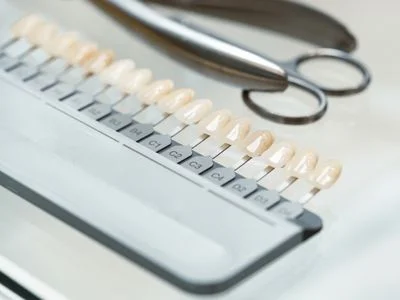
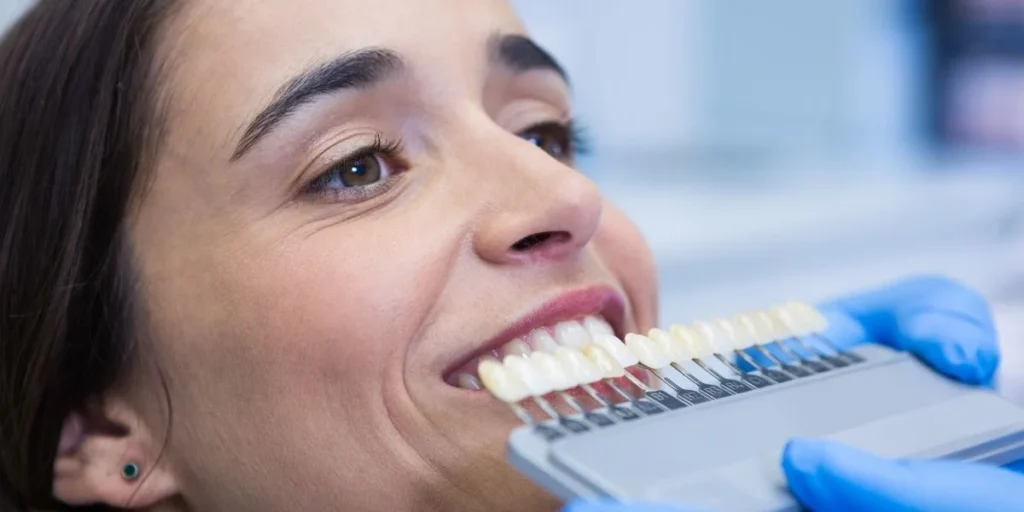
Before the procedure, the dentist assesses the condition of the teeth. Together with the patient, the color and shape that best suits the patient's oral condition and smile are chosen, taking into account any special requests the patient may have. Then, a very thin layer is applied to the front surfaces of the teeth. 0.3-0.7 mm The teeth are prepared by grinding them down to a certain extent. This ensures that the veneers to be placed on the teeth fit properly. The patient does not feel any pain during this process. Afterwards, impressions of the teeth are taken and they are specially prepared in a dental laboratory. leaf toothler Temporary coverings may be used to make the process more comfortable for the patient. In some cases, intermediate trials may be conducted. With veneers, you can achieve the desired aesthetic features (color, shape, etc.) without altering the natural structure of your teeth. Either no changes are made to the tooth, or only minimal correction is applied. The amount of tooth surface removed is limited to 0.3-0.7 mm.
A copy of your teeth, whose appearance you are not satisfied with before treatment, is obtained and a design is created on it. In other words, before any intervention on the teeth, the changes to be made can be shown as a demo at the beginning of the treatment. This demo is called a mock-up. Thus, the patient sees beforehand how the veneer will look in their mouth.
Stage 2: Placement of Leaf Teeth
Once the specially prepared veneers arrive at the dentist's office, the second stage begins. The dentist checks the color and shape of the veneers and, after obtaining the patient's approval, the veneers are bonded to the natural teeth step by step using special adhesives. Thanks to these special adhesives, the patient does not experience problems such as the veneers falling off or coming loose after treatment. As a result of this process, the patient's smile acquires a more aesthetic and natural appearance.
3. Advantages of Leaf Teeth
Aesthetic Appearance: Veneers eliminate aesthetic problems such as discoloration, cracks, and fractures in the teeth, providing a natural smile. Because it is prepared in a very thin layer, its light transmission and reflection properties are very similar to natural teeth, and this feature provides excellent aesthetics. Because porcelain surfaces will be extremely smooth, cigarettes and similar things will not be able to touch them. It minimizes staining and tartar formation caused by various reasons.
Minimal Tooth Preparation: Compared to other veneer methods, less tooth preparation is done, and the loss of tooth structure is much less, making it a less invasive procedure.
Durability: With proper care, veneer teeth can last for many years without discoloration. They have a very high resistance to wear. Of course, since it is a delicate material, if the patient has a problem such as teeth grinding, this should definitely be discussed with the dentist and precautions should be taken before or after treatment.
Quick Result: Leaf tooth duration, It is usually completed quickly; depending on the number of teeth to be treated and the treatment situation, we can say that the treatment is finished within an average of 1 week. In addition, it allows patients to see results immediately.
4. Disadvantages of Leaf Teeth
Cost: How much does a veneer dental implant cost? If we were to ask whether it's a more expensive type of veneer compared to some other aesthetic dental procedures, we could say so.
Repair Possibility: Leaf teeth cannot be repaired and must be replaced if damaged. Therefore, it is recommended to use them with great care.
Teeth Clenching and Grinding Problem: If a person has a problem with teeth clenching or grinding, it can cause damage to the veneers. For this reason, precautions should be taken with certain treatment methods before or after veneer placement.
Who are candidates for veneer dental implants?;
For people who are not satisfied with the shape and appearance of their teeth
In cases of discoloration in the front teeth, when whitening treatments applied to treat the discoloration are ineffective...
In people with spaced teeth
In individuals who have large fillings in their front teeth and whose aesthetic appearance has been compromised as a result of filling decay,
In people whose front teeth are broken or worn down
In hereditary structural disorders
For correcting crooked and misaligned teeth (can be offered as an alternative to orthodontic treatment)
Who cannot have dental veneers?;
To people with jaw disorders
To people who have bad habits such as nail biting and pen chewing.
Dental veneers are not used in cases of severe gum recession.
What precautions should be taken after receiving dental implants?;
After this aesthetic dental treatment, teeth grinding should be stopped. Hard objects that shouldn't be bitten with natural teeth should be avoided. Brushing should be done regularly, just like with natural teeth. Attending follow-up appointments at the times specified by the dentist is important. We need to take twice as much care of the treated teeth as we do of our own teeth so that we can use the treated veneers for many years.
Are there any problems such as detachment or falling off after the veneers are applied?;
Modern bonding technologies have very high adhesion values. If the dentist performs the procedure with technical precision, the veneer can be used like your own tooth, and problems such as falling out or coming loose will not occur.
Veneers offer a wonderful option for those who value aesthetics. For those with aesthetic problems in their teeth who want to beautify their smile, this method, when applied by the right dentist, can yield satisfying results. However, it is important for patients to undergo a proper evaluation and consultation process before consulting a dentist. If the patient adheres to the stated conditions after all procedures are completed, they can use veneers aesthetically and healthily for many years.