




What Causes Tooth Sensitivity?
Tooth sensitivity can have many causes. The most common reasons include tooth decay, gum problems, broken or cracked teeth, thinning of the tooth enamel, or irritation and damage to the nerves in the tooth. To find the answers to the questions "Why do teeth ache?" and "Why do gums ache?", simply read the articles below.
Tooth decay: When cavities in a tooth progress towards the enamel or nerves, they cause the tooth to be exposed to air and lead to sensitivity. This can affect the patient's daily life and often doesn't subside with painkillers; therefore, the patient should consult a dentist to have the necessary treatment applied to the cavities. After treatment, the patient's symptoms usually disappear completely.
Gum Problems: Gum recession, gum sensitivity, and gum inflammation can all cause tooth sensitivity. When gum recession occurs, the roots of the teeth are exposed, leading to sensitivity and tenderness. In gum inflammation, the inflamed tissue in the gums causes gum sensitivity and tooth sensitivity. Therefore, it is necessary to consult a periodontist for treatment. After gum treatment, sensitivity and tenderness in the teeth and gums are minimized, although some sensitivity may remain. In this case, a periodontist may recommend the use of sensitivity-reducing toothpaste.
Cracked Teeth: Tooth cracks can occur for many reasons. These include biting on pens, constantly opening bottle caps or cracking nuts with your teeth, or other incorrect habits such as constantly clenching or grinding your teeth, constantly chewing hard candies, and large fillings (large fillings are usually done because there is a significant loss of tooth structure, which makes the tooth more prone to cracking). Tooth cracks cause the tooth to become excessively sensitive and aching, which can affect daily life.
Contents
 Symptoms of Cracked Teeth
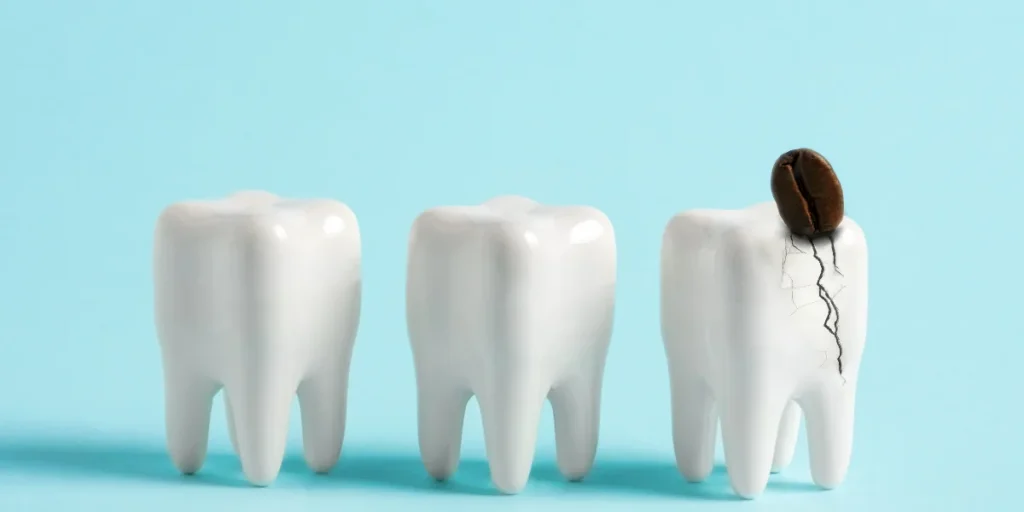 Symptoms of Cracked Teeth
Pain in a tooth or teeth when biting and releasing hard foods usually indicates a crack in the tooth that has opened and closed. Sensitivity to both hot and cold foods, as well as sweet things, is also a sign of a crack in the tooth. Pain that is gradual, temporary, or comes and goes suddenly is also an indication of a crack in the tooth. A crack extending vertically across the surface of the tooth can also cause tooth sensitivity.
Treatment of Cracked Teeth
Early diagnosis of cracked teeth increases your chances of saving the tooth or avoiding more extensive and expensive treatment.
If a simple crack doesn't reach the tooth's nerve, these teeth can be treated with just a filling or crown.
A deep crack means the tooth's nerve has been damaged; because the nerves are damaged, root canal treatment is necessary before a crown can be placed. In some cases, a deep crack splits the tooth in half. In these situations, unfortunately, the only treatment option is extraction of the tooth..
Broken Teeth: Tooth fractures are generally caused by teeth grinding, hard foods, trauma, worn teeth, teeth that have undergone root canal treatment due to significant substance loss, or teeth with advanced decay. Broken teeth, which are easily detected, cause sensitivity and toothache.
Symptoms of broken teeth include:;
- Tooth throbbing and sensitivity.
- Sharp edges on the teeth that could cut the tongue and cheek.
- A cavity in the middle of the tooth.
- Pain
- Tingle
It manifests itself through symptoms such as these.
Treatment of Broken Teeth
There are many different treatment methods for a broken tooth.
These treatment methods;
- Aesthetic fillers
- Bonding
- Crown
- Laminate Veneer
- root canal treatment
Treatments such as these can be applied to treat a fractured tooth, thereby relieving the patient's tooth sensitivity.
Thinning of Tooth Enamel: Tooth wear, This causes thinning of the tooth enamel, which can be described as a result of external mechanical stress on the teeth. Tooth wear and enamel thinning occur when acidic tissue from food or the stomach erodes the surface of the tooth enamel. It most often occurs on the tongue side of the upper teeth.

What causes sensitivity in the front teeth?
Sensation in the lower teeth;
In cases of front tooth sensitivity, Teeth grinding can cause excessive wear and tear, leading to thinning of the tooth enamel. This is one of the biggest reasons for sensitivity and pain, especially in the lower front teeth. Other causes include gum recession, cavities, cracked or broken teeth.
Sensation in the upper teeth;
External There are many reasons for tooth sensitivity. Some of these include: aging fillings, broken or cracked teeth, tooth decay, receding or inflamed gums, and incorrect gum placement. external brush usage and incorrect external It can be called a brushing method.
Nerve Irritation in the Tooth: If you experience tooth sensitivity in your daily life, such as when eating, consuming hot or cold food, or breathing, one of the reasons mentioned above could be irritation of the nerves in the tooth. The pulp inside the tooth is a soft structure filled with nerves, tissues, and blood vessels. These pulp nerves are among the most sensitive nerves in the human body, and when these nerves are irritated or infected with bacteria, it can cause tooth sensitivity, They cause abscesses and severe pain.
Causes of Tooth Sensitivity
- Teeth clenching or grinding
- Crack or fracture in the tooth
- Thinning of tooth enamel
- Damage to the nerves in the tooth
- Gum recession or inflammation
- Tooth Decay
- Incorrect brushing habits or brushing too hard
These are the main general causes of tooth sensitivity; let's examine whether there is a definitive solution to tooth sensitivity.
How to relieve toothache?
There are many treatment methods for tooth sensitivity. Most of these are performed by a dentist in a clinic, while some are methods that the person can apply at home.
For teeth clenching and grinding, the patient should consult with a joint specialist or oral surgeon to determine the appropriate treatment method. Splints, night guards, or masseter Botox injections are among the most suitable treatment options. Sometimes, the individual can also find relief at home by applying warm compresses and massaging the jaw muscles. In this way, the teeth clenching problem is eliminated, and the tooth sensitivity is also treated.
If a tooth has a crack or fracture, the best solution is a filling or crown. You can consult a dentist to learn about the most suitable treatment method and get treatment to get rid of your toothache problem.
Since thinning of tooth enamel can occur due to many reasons, the treatment method is decided after an examination by a dentist. Some possible treatments include night guards for teeth grinding, crowns for cracks, and root canal treatment for advanced thinning.
When the nerves of a tooth are damaged, root canal treatment is usually performed. If this procedure is not done, unfortunately, the sensitivity will not go away and the tooth may become infected.
If you experience gum recession or inflammation, it's necessary to consult a periodontist. Tooth sensitivity can be relieved with procedures such as curettage, flap surgery, or free tissue grafting (SDG).
Tooth decay is generally treated with standard fillings. Tooth sensitivity is relieved with standard back tooth fillings or aesthetic fillings in front teeth. In advanced cases of decay, root canal treatment is sometimes necessary.
Incorrect brushing habits or brushing too hard can damage your teeth, so you should see a dentist to learn the correct brushing technique and use a brush with the appropriate bristle strength for you.