



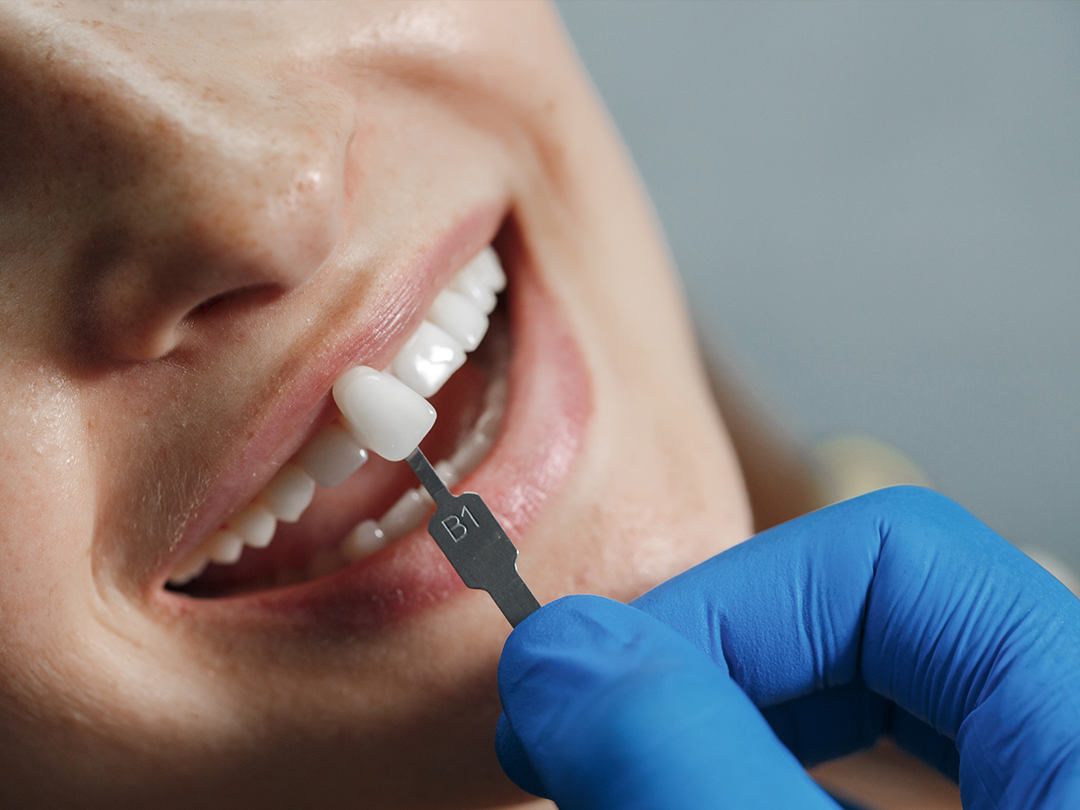
What is laminated porcelain?
 Laminate veneers are a type of porcelain coating applied to the front of the teeth with minimal or no filing in some cases. Unlike other veneers, porcelain laminates do not completely cover the tooth. They are applied only to the front of the teeth in the form of thin porcelain sheets. It is a treatment method applied for aesthetic purposes to patients with slight gaps in their teeth and those who are dissatisfied with the color, shape, or size of their teeth. This technique has become increasingly popular in recent years for patients who do not want to have their teeth completely filed down.
Patients experiencing aesthetic problems with their teeth may consider laminate veneer treatment. Porcelain laminates, being very thin at 0.3-0.7 mm, provide a very natural tooth appearance. Highly compatible with gums, laminates are also known as porcelain veneers or laminate veneers.
The application method for laminate veneers differs slightly from that of zirconium porcelain or Emax veneers. Laminate veneers may be necessary in cases where teeth are shorter than normal, significantly crooked, show color discrepancies, have gaps between teeth, or are broken. They can also be applied in cases where teeth whitening is insufficient or the teeth are excessively discolored. Furthermore, they are used in the treatment of deformed old restorations and congenital structural defects in teeth. laminate veneer The process can be carried out.
Contents
Composite Laminated Coating
Composite is an acrylic alloy material used in dental fillings. Veneers, on the other hand, refer to the process of bonding materials like porcelain or composite to the front of teeth to change their shape and color. Composite laminate Dental implants are an aesthetic treatment technique applied to the front of teeth that have changed color, are broken, or have gaps between them. This technique, which aims to repair and treat aesthetic defects in the teeth, provides a very natural and harmonious smile.
Often preferred for repairing aesthetic problems in teeth. composite laminate The treatment can be completed in a short time, such as 1-2 hours. This method, used to treat congenital or acquired color and shape irregularities in teeth, stands out due to its long-lasting effect. Also known as bonding, this application gives patients an appearance indistinguishable from their own teeth. Long-lasting use is achieved with durable composite material fixed to the front of the teeth in a thin structure.
In composite veneer applications, white, tooth-colored composite resins are used. Treatment can be completed in one session or sometimes in two sessions. Oral hygiene after treatment is also very important. Since veneers are made of composite, they may yellow over time if tea, coffee, or cigarettes are consumed. In such cases, a dental check-up is necessary. It is possible to restore the composite veneers to their original color with a minor polishing procedure performed by the dentist.
 What are the steps involved in applying composite laminate?
 What are the steps involved in applying composite laminate?
For composite veneer treatment, one session is usually sufficient, although this varies depending on the number of teeth. However, if there are many teeth, it can be done in two sessions to avoid tiring the patient. No prior preparation is required for this procedure; the process can begin immediately. So, what are the stages of the composite veneer treatment?;
- The teeth to be treated with composite veneers are smoothed and prepared by the dentist who will perform the procedure.
- The dentist may need to remove a very thin layer of tooth enamel, the outermost layer of the tooth, to ensure the composite veneer fits perfectly and is a perfect match for the tooth.
- In some cases, it is possible to perform the procedure without the need to file down the tooth enamel.
The dentist can decide on the tooth color to be applied together with the patient. - After the enamel is removed to remove tartar, plaque, or decay, a special acid is applied to the tooth surface to achieve a smoother and more even appearance.
- Bonding between the smoothed tooth surface and the composite resin is achieved through a special solution called bonding.
- The composite material, selected in consultation with the patient, is carefully placed onto the tooth surface using special brushes and spatulas, and then shaped to resemble the tooth.
- Blue light is used to harden the solutions and composite resin applied to the surface.
- Once the composite resin has fully hardened, the varnishing process begins.
- To polish composites, a polishing process is performed using specific tools, and the application is completed.
If we don't take proper care of our oral health, just as our own teeth accumulate plaque and turn yellow, composite veneers can also undergo discoloration. Therefore, regular check-ups with our dentist are essential. If we maintain our oral hygiene and donor check-ups regularly, it's possible to use composite veneers for a long time. However, we should avoid anything we wouldn't do with our own teeth after the composite veneer procedure. We should also avoid applying force perpendicular to the teeth (opening bottle caps, opening hard objects, etc.) as much as possible.
Composite Laminate Prices
Composite laminate prices, The number of teeth to be treated can vary depending on how many teeth you want treated. If you choose this procedure to achieve an aesthetically pleasing and unified smile, you may need to treat 8-12 teeth in both the upper and lower jaws. The number of teeth is determined according to the patient's smile line. If the treatment is applied to the teeth visible when the patient smiles, complete harmony is achieved, and the patient gains an aesthetically pleasing smile.
You can review before and after images of this procedure at the dental clinic where you will have the treatment. While you might think you'll get this procedure done at a low price, you could also experience negative problems related to your teeth and gums. Therefore, we recommend that you research the clinic beforehand and review sample images of the procedures they have performed previously.