


The Importance of Intraoral Scanners in Prosthetic and Veneer Treatments
The speed and accuracy of prosthetic and veneer treatments today have been made possible by the innovations that digital technologies have brought to the field of healthcare. Intraoral scanners, frequently used in dentistry, enable quick and accurate measurements while increasing patient comfort. These advantages offered by intraoral scanners in the digital dentistry process save time and allow for more aesthetic and natural results. In this article, we will discuss the role of intraoral scanners in prosthetic and veneer treatments, the advantages they offer, and how they improve the treatment process.
Contents
- What is an Intraoral Scanner and How Does it Work?
- The Role of Intraoral Scanners in Prosthetic and Veneer Treatments
- Advantages of Digital Scanners: Speed and Accuracy
- What are the application areas of intraoral scanners?
- The Impact of Digital Scanners on Patient Comfort and Treatment Process
- Are there any disadvantages to intraoral scanners?
What is an Intraoral Scanner and How Does it Work?
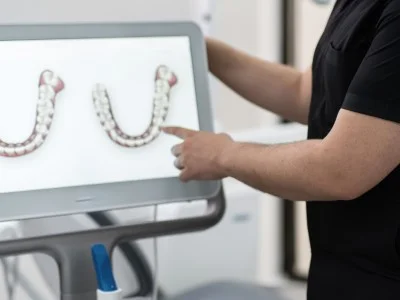
Today, intraoral impressions are taken using digital scanners, moving beyond traditional methods. What is an oral scanner? This question becomes important at this point. These devices scan the oral cavity in three dimensions and create a digital model. This digital model helps physicians plan treatment more accurately, while offering a more comfortable process for the patient.
Intraoral impression scanners By capturing every detail inside the mouth in high resolution, it minimizes the margin of error. This allows the measurements to be processed quickly in a laboratory environment. Digital scanners eliminate the inconveniences that can be experienced with traditional impression-taking methods and improve the patient experience.
Developed in recent years digital scanners Using light or laser technology, these devices scan teeth and gum tissues with millimeter precision. The working principle of these devices is simple: A small camera at the tip of the scanner scans the surface of the teeth, instantly converting it into a digital model and transmitting it to a computer. This allows dentists to manage the treatment process more reliably.
 The Role of Intraoral Scanners in Prosthetic and Veneer Treatments
 The Role of Intraoral Scanners in Prosthetic and Veneer Treatments
In dental aesthetic treatments such as prosthetics and veneers, intraoral scanners play a critical role in ensuring the success of the process. Intraoral scanners By digitally scanning the tooth structure and surrounding tissues, these devices make treatment planning faster and more accurate. They eliminate the long waiting times caused by the traditional impression-taking process.
Intraoral scanners, also known as dental scanning devices, allow patients to begin treatment in less time. They are particularly used in veneer and prosthetic treatments. the importance of digital scanners This is evident in both increased patient comfort and the accuracy of the measurements obtained. Intraoral scanners ensure that prostheses fit correctly, thus shortening the treatment process.
The role of digital scanners in the treatment process also contributes to increasing trust in the patient-doctor relationship. These devices, which allow doctors to show patients the process in real time, eliminate uncertainties about the treatment. In this way, patients understand the procedures better and participate in the treatment with higher motivation.
Advantages of Digital Scanners: Speed and Accuracy
One of the most important advantages offered by digital scanners is the ability to take measurements quickly and accurately. Advantages of digital scanners The most notable advantages are speed and accuracy. These scanners provide results much faster than classic impression methods and minimize the margin of error. Shorter waiting times for patients are a significant factor in improving the dental experience.
Thanks to its 3D intraoral scanning capability, dentists can plan treatments without missing even the smallest details. The three-dimensional scanning provided by these devices is frequently preferred not only in major treatment processes such as prosthetics and veneers, but also in teeth whitening and orthodontic treatments. 3D dental scanner The data obtained through this process improves patient comfort and reduces the risk of physician error.
Another advantage of digital scanners is that the measurements obtained can be processed quickly in a laboratory environment. This both shortens treatment time and prevents errors that may occur in laboratory processes. The combination of speed and accuracy ensures successful results in the digital dentistry process.
What are the application areas of intraoral scanners?
Intraoral scanners have a wide range of applications. What are the application areas of intraoral scanners? This question is important for understanding how these devices are used in different treatment processes. Scanners are successfully used in many treatments such as dental prosthetics, veneers, orthodontics, and teeth whitening. Especially in aesthetic dental treatments, the detailed images provided by intraoral scanners positively affect the treatment process.
In orthodontic treatment, intraoral impression scanners make it possible to track tooth movement in detail. This is particularly advantageous in treatments requiring precise adjustments, such as with clear aligners. Because the position of the teeth is digitally monitored, corrections made throughout the treatment process are more accurate.
Intraoral scanners are also preferred in implant treatments. Digital data obtained during the implant placement process helps in placing prostheses in accordance with the jaw structure. This feature ensures both aesthetic and functional results.
The Impact of Digital Scanners on Patient Comfort and Treatment Process
The use of digital scanners increases patient comfort during treatment and allows physicians to obtain more accurate results. The importance of digital scanners Digital scanners not only shorten the processing time but also increase the accuracy of the measurements obtained. They offer a great convenience, especially for patients who do not want to waste time during the treatment process.
When intraoral scanners are used during the treatment process, the impression-taking stage is completed in seconds. This eliminates the discomfort patients experience with traditional impression-taking methods and makes the process more comfortable. The comfort provided by these devices is a significant advantage for patients, especially in long-term treatments such as prosthetics and veneers.
Patients can enjoy a comfortable treatment process thanks to the high accuracy rate provided by intraoral scanners. Dentists, using digital scanners, achieve aesthetically pleasing results that are appropriate to the tooth structure, while also meeting patients' expectations throughout the treatment process.
Are there any disadvantages to intraoral scanners?
 Are there any disadvantages to intraoral scanners?
Intraoral scanners, commonly used in digital dentistry, are known as a safe technology and are used without causing any side effects. Are there any disadvantages to intraoral scanners? The question of the reliability of these devices is of great importance to many patients. However, these devices can be used in dental procedures without risking patients' health. The preference for radiation-free scanners, in particular, allows patients to use this technology with peace of mind.
Digital scanners stand out for their reliability not only for the comfort they provide but also for their high accuracy rates, which simplify the work of dentists. Intraoral scanners scan the tooth structure in detail without causing any harm. Using the digital data they obtain, dentists can plan the treatment process more accurately and quickly. This both increases patient comfort and saves time in the treatment process.
Intraoral scanners are harmless and play an important role in modern dentistry. Frequently used in treatments such as prosthetics, crowns, and orthodontics, these devices are safely utilized as a technology that both increases patient satisfaction and accelerates treatment processes.
You too can complete the process flawlessly by scheduling an appointment at İnci Diş clinics, where intraoral scanners are used for your prosthetic and veneer treatments.