




Types of Composite Fillings
Composite fillings, also known as white fillings, are one of the most preferred types of fillings today, both aesthetically and functionally. They contain a resin-based (plastic) structure and glass or ceramic particles, and adhere to the tooth both mechanically and chemically. They are categorized according to their composition, application area, and method of application.

Contents
Composites by Particle Size
Macrofill composites
The particles are large, approximately 10-100 microns in size. It is the first type of composite developed, its durability is not bad, but its surface is rough and it stains over time; aesthetically, it is not considered very good.
Microfill composites
It contains very small particles, around 0.04 microns. Its biggest advantage is that it can be polished very well and looks natural, but it is not very durable, so it is generally used on front teeth.
Hybrid composites
It contains both small and large particles, thus balancing both aesthetics and durability, and can be easily used on both front and back teeth.
Nanohybrid and nanofill composites
These are the newest generation of composites containing nano-sized particles; they are both very strong and look natural like teeth, and they are long-lasting. They are currently the most preferred.
Composites According to Their Application Area
Anterior composites
Used for front teeth, aesthetics are a priority; it transmits light better and looks more transparent and natural.
Posterior composites
Designed for back teeth, it has a harder structure to withstand chewing force.
Universal composites
It is a popular choice because it is practical and can be used on both front and back teeth.
Composites by Consistency
Flowable composites
It has a more fluid structure and is used for minor cavities or as a substrate, but it is not very durable.
Packable composites
It is denser and harder, easier to shape, and is especially preferred for back teeth.
Depending on the type of hardening
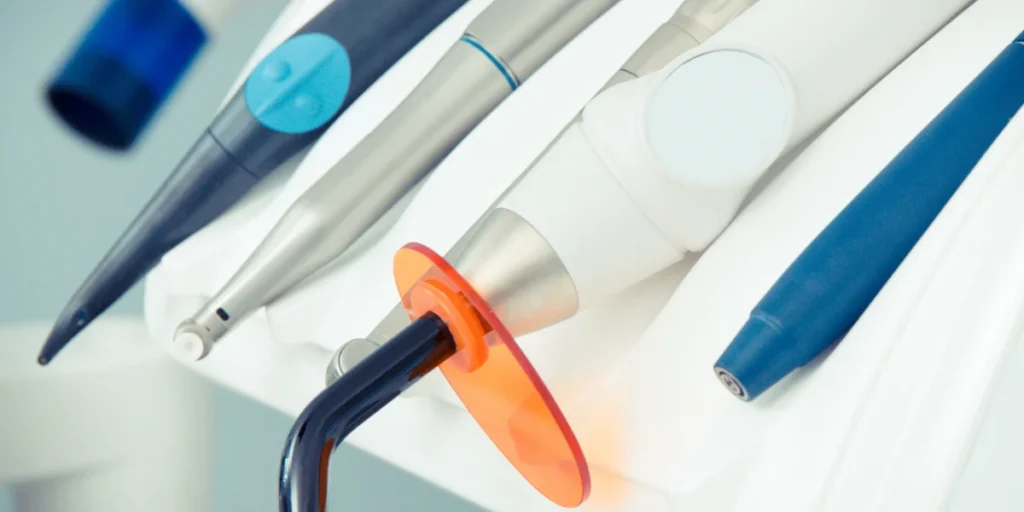
Light-curing composites
It hardens with blue light; this is the most commonly used type, and the doctor can control it as needed.
Chemically cured composites
When the two substances are mixed, it hardens on its own, which is not a popular choice nowadays.
Dual cure composites
It hardens both with light and chemically, and is especially used in deep areas where light cannot reach.
Special Purpose Composites
Bulk fill composites
Applying it thickly in one go saves approximately 4-5 mm of time.
Fiber-reinforced composites
It contains fibrous structures and is used for support in cases of fractured teeth or bridge-like structures.
Advantages
• Matches tooth color and looks aesthetically pleasing.
• It adheres well to the tooth.
• It is implemented by removing fewer ingredients.
• Can be repaired if necessary.
Disadvantages
• The color may change over time.
• It is more prone to wear and tear compared to amalgam.
• The procedure is delicate; the physician's technique is very important.