




Why is the sterilization process of instruments used in dental treatment important?
In dental treatments, the first thing patients prioritize when visiting a clinic is being examined, starting their treatments, and continuing their procedures in a clean and tidy environment. As a clinic, we must be aware of the importance of this sterilization process for the health of both patients and staff.
Dental clinics are obligated to maintain a high level of control and to implement sterilization processes in a regular and systematic manner. This process involves successful and sequential steps followed by staff to protect both professional standards and patient health.
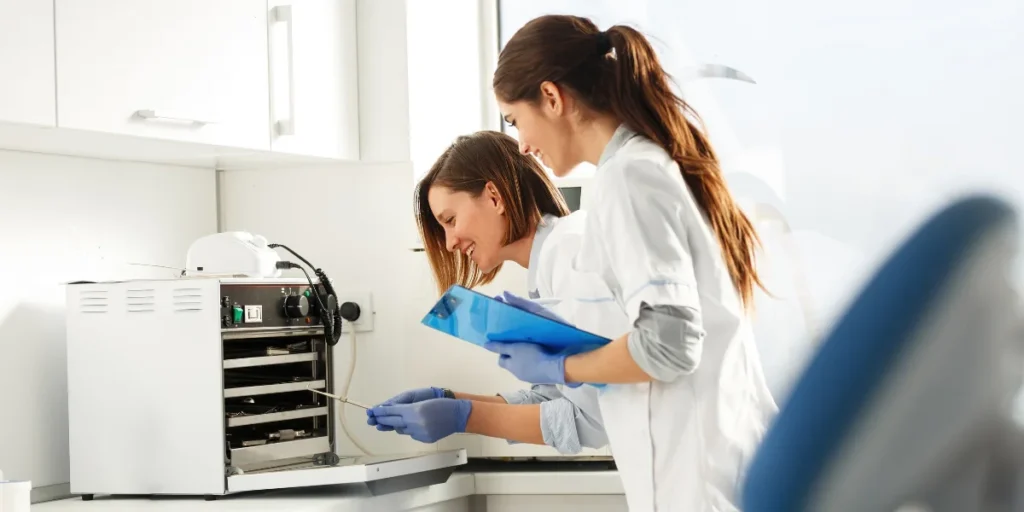
The controlled and systematic sequence in the sterilization process protects the staff, dentist, assistant, and patients working in this unit. It prevents the multiplication of bacteria and the spread of germs that could lead to the transmission of diseases on instruments and surfaces.
Not all materials and instruments used in dentistry are disposable. The materials used, such as examination sets (probes, mirrors, forceps), hand instruments (mixing spatulas, filling instruments), and surgical instruments (forceps, elevators, implant sets), are collected by a sterilization technician after each use and undergo a specific cleaning process to prepare them for reuse. This process involves stages such as collection, cleaning, washing, drying, packaging, and autoclaving. During this time, the technician must be highly knowledgeable, careful, and precise in their work. After the autoclaving process, the sterile (clean) instruments are checked again by the technician, and those ready for use are then selected for procedures. Each process must be performed carefully and precisely by an experienced technician.
The sequence followed for a safe and sterile process is as follows:
- Self-protection
- Sterilization process
Self-protection
The doctor, assistant, and sterilization officer must use all necessary equipment correctly and in a proper manner during and after the procedure to protect themselves from infectious diseases that may arise from the equipment. Personal protective equipment (PPE) should include goggles, face shields, masks, gloves, and protective gowns.
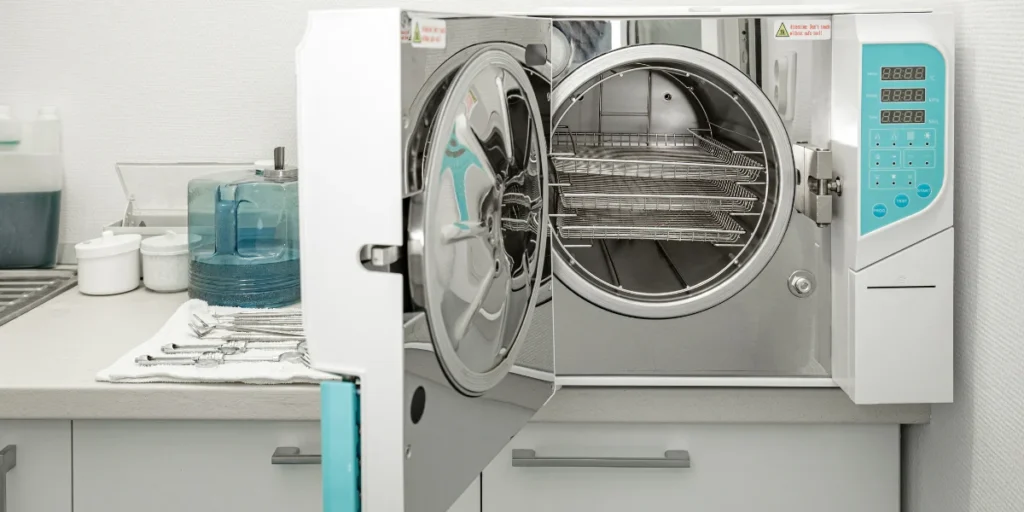
Sterilization Process
The sterilization process requires a detailed, careful, and multi-stage procedure. Instruments to be sterilized are collected by a designated person, then placed in a special washing machine, or sometimes hand-washed with special solutions and detergents. After washing, the instruments are dried and checked, then placed in special packaging and packaged. They are then placed in high-steam autoclaves, programmed for 1-1.5 hours. This high-steam autoclave is the final stage to eliminate all microorganisms. An indicator paper, which shows that the instruments are sterile and ready for use, is checked inside the device, and the instruments are prepared for reuse.