




Implant or Bridge?
Dental implants and bridges are two completely different treatment methods preferred by doctors to address tooth loss in the mouth. Both treatment methods involve replacing a missing tooth in the affected area. After examination, dentists determine that implant and bridge treatments, when performed according to the patient's oral planning and with the correct examination and procedure, are treatments that can last for many years. Patients experiencing tooth loss are often undecided about which of these two treatments to choose.
Dental implants and bridges are treatments that our dentists determine the most suitable option for the patient after a detailed examination and review of the patient's oral cavity and X-rays/CT scans. Both treatments have advantages and disadvantages.
Contents

What are dental implants?
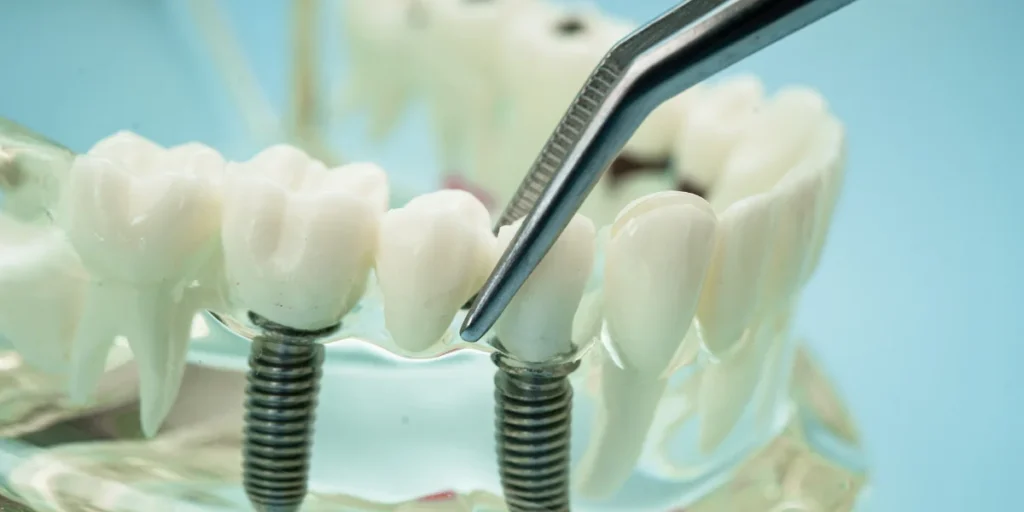
Dental implant treatment refers to a procedure where titanium screws are placed in the space left by missing teeth, and dental crowns are then placed on these screws. The missing teeth are replaced without damaging other teeth in the mouth. Dental implants provide a permanent, long-lasting solution that offers the comfort of natural teeth.
What are the advantages and disadvantages of dental implants?
Advantages
• Adjacent teeth are not reduced in size.
• Provides a natural tooth feel.
• It is long-lasting.
• Prevents osteoporosis
• Provides a natural look from an aesthetic point of view.
Disadvantage
• Requires surgery
• The process takes a long time.
• It is expensive
• Additional surgical procedures may be performed if there is insufficient bone for the implant.
What is Bridge Dental Treatment?
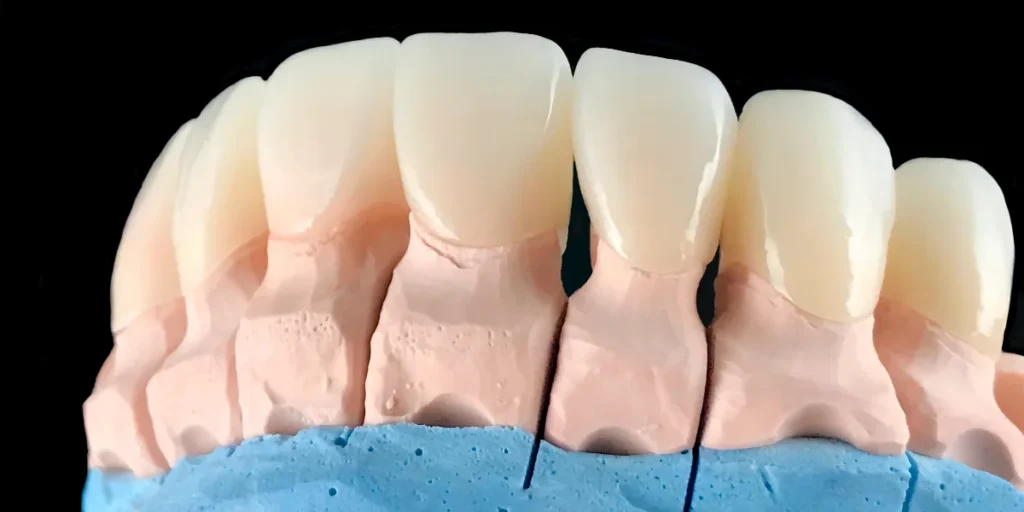
Bridge treatment consists of prosthetic teeth fixed in place of a missing tooth, supported by the healthy teeth on either side. Crowns are placed on the adjacent teeth that serve as support. Since the adjacent teeth need to be reduced in size during bridge construction, healthy teeth are affected. Bridge prostheses utilize the strength of healthy teeth to perform chewing functions while also providing an aesthetic appearance. In cases of missing teeth, the bridge method offers permanent solutions.
What are the advantages and disadvantages of dental bridges?
Advantages
• Does not require surgery
• Treatment and recovery time is short.
• It can be a last resort if the bone condition is not suitable for an implant.
• It is cost-effective.
Disadvantage
• Healthy teeth may need to be cut.
• Teeth that have been cut can also develop sensitivity or decay over time.
• Since there is no support from the root, gum recession can occur.
• It is not long-lasting and may require replacement periodically.
So which treatment method should be used?
The location of the tooth, bone structure, the patient's overall health, and individual financial circumstances can all vary.
For long-term treatment, implant surgery may be preferred if the patient has the time, overall health, budget, and is not afraid of surgery.
If the patient wants to see results quickly and needs crowns on both the patient's teeth and the adjacent teeth, a bridge procedure is a logical option.
Dental implants and bridges are two effective methods for treating missing teeth, but implants are the closest to natural teeth and offer long-term advantages in terms of both bone and tooth health.