



Why is root canal treatment performed?
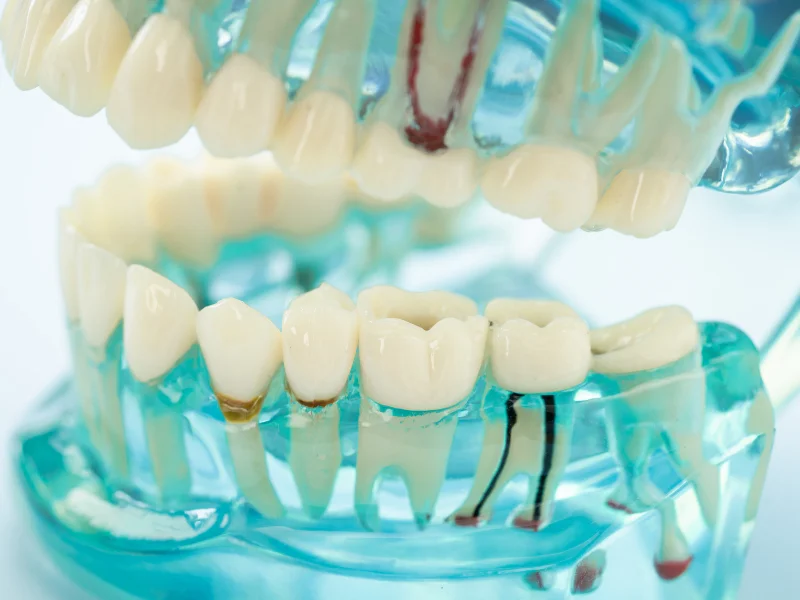
Endodontic treatment, also known as root canal treatment, is a treatment method applied to decayed or infected teeth. Not every decayed tooth is suitable for root canal treatment; it is mostly performed when fillings are insufficient, when there is an infection in the tooth, or when it is causing severe pain. Root canal treatment can also be considered the last treatment option before extraction.
If tooth decay is not treated in time, it can progress deeper and cause inflammation of the nerves in the tooth. Inflammation of the tooth nerves can cause severe toothache, discoloration of the tooth, and sensitivity to hot and cold. Teeth that require root canal treatment also cause severe pain, especially at night. These pains, often throbbing, can sometimes be persistent and worsen.
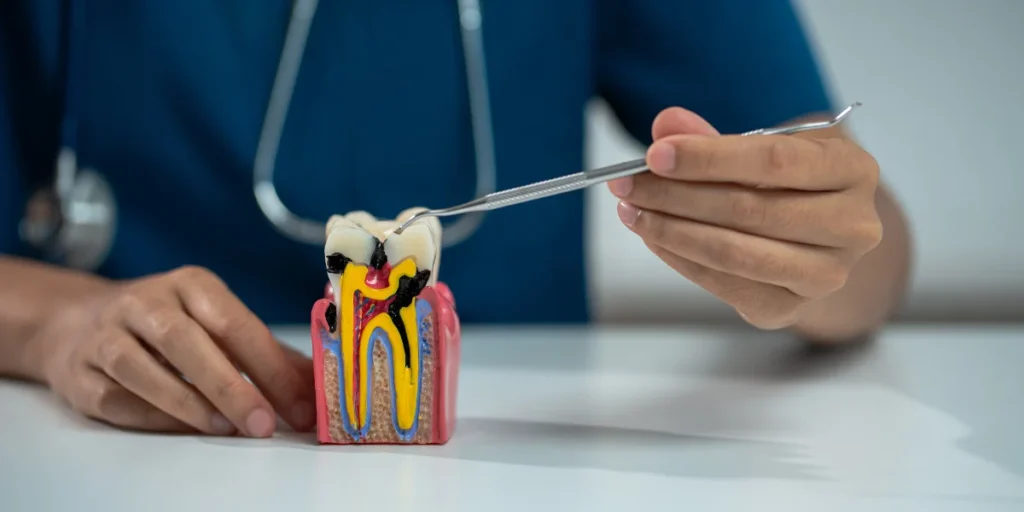
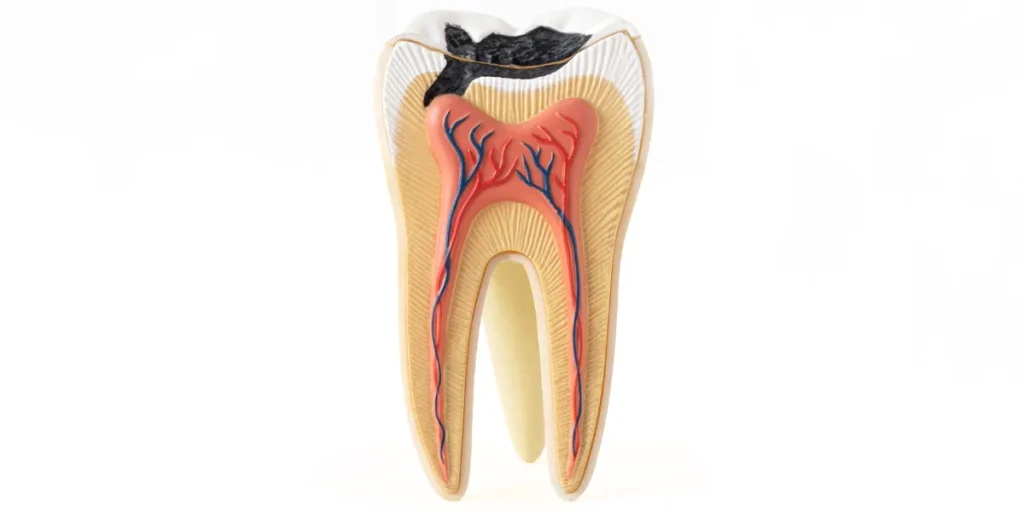
The outer part of the tooth is covered with hard enamel tissue, while the inner part contains a cavity extending along the root, composed of blood vessels and nerve tissue. The tissues that give the tooth its vitality and life are the blood vessels and nerves located in this central cavity of the tooth, called the pulp. During root canal treatment, the soft tissue, or pulp, and the nerve located in the natural cavity inside the hard tissue of the tooth, called the root canal, are removed, the inside of the tooth is cleaned, and then the opened cavity is filled with artificial nerve tissue.
The nerve removed from the tooth is not vital for tooth health and function, but its removal prevents the person from experiencing severe pain. This nerve is only a sensory nerve used for hot and cold perception. A root canal treated tooth loses its vitality, and the tooth only helps protect the surrounding bone and continues its chewing function. However, a tooth that has lost its vitality is quite susceptible to fracture and discoloration, so it is recommended to have a crown placed on it.
Contents
- How is root canal treatment performed?
- Things to Consider After Root Canal Treatment
- Why is root canal treatment performed?
- What should be done if a root canal treated tooth becomes infected?
- Will there be pain after root canal treatment?
- How long does it take for a root canal to heal?
- What are the prices for endodontic root canal treatment?
How is root canal treatment performed?
Root canal treatment can be performed by a dentist or an endodontist. The endodontics department is the name given to the dental specialization that provides root canal treatment.
- The first step in root canal treatment is taking an X-ray to determine why the tooth needs root canal treatment; that is, the extent of the decay and signs of infection are examined to make the necessary diagnosis for treatment.
- The dentist will use local anesthetic to numb the area near the tooth. In some cases, anesthesia may not be necessary because the tooth nerve has died, but many dentists numb the area to ensure the patient is comfortable and the procedure is performed more smoothly.
- It is very important to prevent saliva from getting on the tooth during treatment, and the area around the tooth being treated must be completely dry. For this, the dentist may place an appliance, such as a rubber pad, on the area or use cotton to keep the area dry.
- The dentist will then create an access hole to reach the root canal. Through this hole, harmful bacteria, decayed nerve tissue, and pulp are removed from the tooth. The cleaning process is performed using root canal files (hand files).
- After the decayed nerve tissue and pulp in the tooth are removed and the inside of the tooth is cleaned, the canals in the tooth are widened with an instrument called an endomotor.
- The length of the tooth's root canals is measured, and artificial nerve tissues to be placed inside the tooth are prepared.
- The microscopic debris removed from here is cleaned regularly. After the inside of the tooth is thoroughly cleaned, the tooth's root canals are flushed with a syringe, and then dried with the help of thin cotton swabs.
- Artificial nerve tissues are placed into the dried root canals. The treatment of the tooth is then completed by placing a top filling.
Things to Consider After Root Canal Treatment
- It is necessary to avoid biting hard or crusty foods until and after root canal treatment is complete. This is because a root canal treated tooth is prone to fracture. Teeth that have lost their vitality, i.e., teeth that have undergone root canal treatment, are much more susceptible to fracture over time; therefore, it is absolutely essential to take great care of a root canal treated tooth.
- It is important to maintain a consistent daily dental hygiene routine. Considering tooth sensitivity, brushing your teeth gently and in circular motions at least twice a day is essential. Not neglecting daily dental hygiene is crucial both for post-root canal treatment and for overall oral health.
- To prevent possible infections after root canal treatment, it is necessary to use dental floss at least once a day.
- It is recommended to reduce the consumption of sticky and sugary foods for a while after treatment. Sugars are one of the most important causes of tooth decay.
- If your doctor has prescribed medication or mouthwash after endodontic treatment, it should be used regularly.
Why is root canal treatment performed?
A tooth's nerve or pulp is damaged, and root canal treatment is necessary due to advanced decay, a fracture, or trauma. The damaged pulp or nerve allows bacteria to enter and multiply within the root canal.
Bacteria and other decaying debris cause infection or a tooth abscess. An abscess is a sac filled with pus, and it forms when the infection spreads to the very end of the tooth's root tip. A tooth abscess causes severe pain. Besides causing an infection in the root canal, an abscess can also lead to swelling that can spread to the face, neck, or other areas of the head, bone loss around the tooth root, and drainage problems in the tooth and cheek.
Treating an abscessed tooth as soon as possible is crucial for maintaining a healthy quality of life. Toothaches, especially those that worsen at night, can affect sleep quality and lead to problems like difficulty concentrating during the day.
What should be done if a root canal treated tooth becomes infected?
If root canal treatment is unsuccessful, infection (inflammation) can occur in the roots of the tooth. If this happens and the infection is not severe, the root canal treatment can be repeated (retraiment), and after the inflammation is treated, follow-up appointments are scheduled to monitor whether the inflammation has cleared. In some cases, antibiotic use is also recommended. If a root-treated tooth becomes infected, it is necessary to consult an endodontics department.
Will there be pain after root canal treatment?
Although root canal treatment is known to be painful, it doesn't cause more pain or discomfort than a normal filling procedure. The pain and tenderness felt are due to the existing inflammation and infection. After root canal treatment, there may be some tenderness, especially at the root tip, for the first 3 days, and this pain, which is normal and can be relieved with painkillers, will gradually subside after 3 days.
How long does it take for a root canal to heal?
During the first few days following root canal treatment, there may be tenderness in the surrounding tissue, especially if a cleared infection is present. Teeth with infections, in particular, will be monitored periodically by the dentist, and the success of the treatment will be assessed once the infection has subsided.
What are the prices for endodontic root canal treatment?
The cost of root canal treatment generally varies depending on the condition of the tooth. To get a price quote for root canal treatment and fillings, you need to see a dentist. It's difficult to answer questions like "What are the prices for root canal fillings?", "What are the prices for root canal treatment in private clinics?", or "How much does root canal treatment cost?" because each clinic has its own pricing policy. To learn the cost of root canal treatment, you need to see a dentist for an examination, as the cost varies depending on the condition of the tooth's roots. Prices can be higher in teeth with infections, problems in the root canals, and in cases of multiple root canals.