



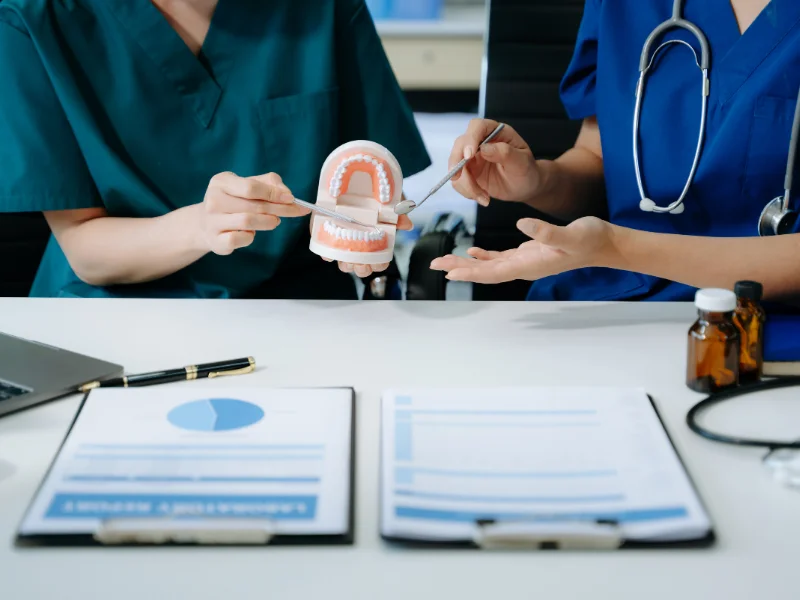
Oral Diagnosis
A good and correct treatment, and an accurate diagnosis, are determined by the initial examination. In dentistry, a comprehensive examination is performed for diagnosis. This is called oral diagnosis. It is the first step in identifying problems inside the mouth and then starting treatment.
Oral diagnosis is a process where dentists evaluate patients' oral and dental health, identify any problems, and create a treatment plan. It can also be described as a routine dental check-up before starting treatment.
When the patient arrives at the clinic, their information is collected, a record is created, and X-rays are taken before they are taken to the examination room for an oral examination and evaluation of the X-ray images. The patient's general health status, dental hygiene habits, previous treatments, and a more detailed analysis of their teeth and jaw structure are performed and evaluated.
Based on this information, the dentist creates a personalized treatment plan and process for the patient. This allows the focus not only on the necessary procedures but also on preventing potential future problems.

Oral diagnostic examination is a crucial stage where dentists thoroughly assess patients' oral and dental health, identify problems, and guide them towards appropriate treatment.
During an oral diagnostic examination, the patient's oral cavity is examined, and X-ray images are reviewed and evaluated. Various gum problems, cavities, and jaw or joint issues are assessed here. The patient's general health status, genetic factors, medication use, and information about previous treatments are presented, and a treatment plan is created that is suitable for the patient's individual oral structure.
Oral diagnostic examination aims to protect the patient's oral and dental health by treating existing problems, identifying potential future issues, developing a comprehensive treatment plan, and improving the patient's overall health and quality of life.
When Should Oral Diagnosis Be Performed?
It can be done at different times depending on the individual's specific circumstances and needs. Generally, for patients without problems, it is appropriate to have it done once a year. This annual routine is for maintaining oral health and for the early detection of potential problems.

Patients with gum problems, or those who have experienced or are experiencing dental or jaw trauma, can create a treatment plan by consulting with their doctor.
Oral diagnostic examinations are important not only when symptoms appear, but also through regular check-ups to maintain oral and overall body health. Good oral health can reduce the risk of developing other systemic diseases, improve overall quality of life, and allow for less invasive and more economical treatments through early diagnosis and preventative measures. This reduces long-term treatment costs and protects patients' budgets.