



Retainer
Contents
- Orthodontic Treatment Post-Treatment Fixative Wire Retainer
- What conditions can cause tooth misalignment after orthodontic treatment?
- Why is retainer wire important?
- Retainer Wire Manufacturing Process
- Treatment Methods Used in Reinforcement Therapy
- What is a Reinforcement Treatment Appliance?
- Prices of Reinforcement Therapy Appliances
- Why is Retainer Wire Treatment Needed?
- Retainer Wire Fracture and Dislocation During Reinforcement Therapy
- How long is retention therapy (retainer wire) used?
Orthodontic Treatment Post-Treatment Fixative Wire Retainer
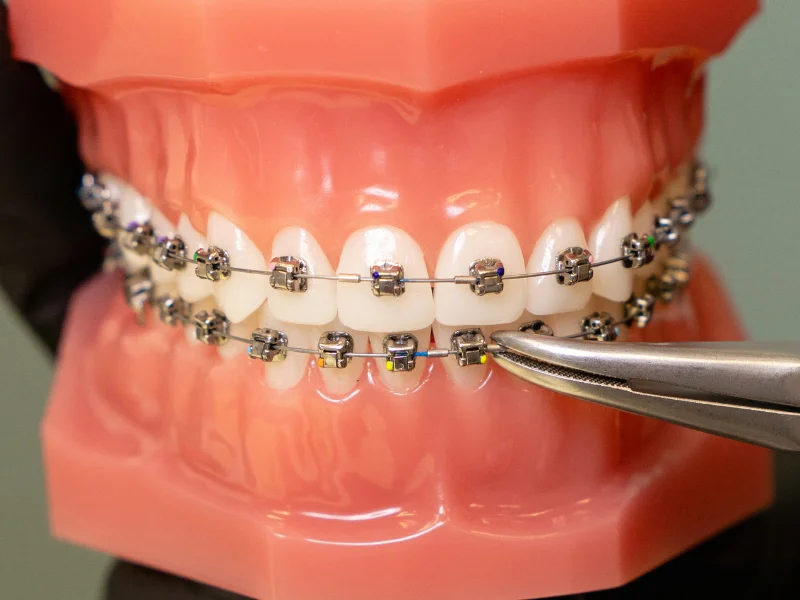
Retainer wires, also known as fixation wires, are a fixation method used after orthodontic treatment to prevent the patient's teeth from being misaligned.
What conditions can cause tooth misalignment after orthodontic treatment?
1) Patients have difficulty pushing their teeth together with their tongue.
2) Patients constantly touching their tongues to their upper or lower teeth due to incorrect swallowing.
3) The patient has slurred speech or similar speech disorders.
4) Patients who have undergone orthodontic treatment to widen their jaw, especially in the upper jaw, or those who have had treatment to close excessive gaps between their teeth, may require lifelong use of retainer wires for these types of problems.
5) If cleft palate or lip have been treated, lifelong reinforcement therapy may be necessary after these treatments.
Why is retainer wire important?
It is very important that the tooth alignment achieved after orthodontic treatment remains stable without changing, as teeth move within the surrounding bone and gum tissue during orthodontic treatment. The oral structure is very susceptible to change, and retainer wires are absolutely necessary to keep the alignment stable, especially after orthodontic treatment. Bone resorption, or bone destruction, occurs in the direction of tooth movement. Conversely, apposition, or bone formation, occurs in the opposite direction. Therefore, when your orthodontic treatment is finished and the brackets are removed, the teeth tend to return to their original position. Consequently, when treatment is complete... Retention treatment is applied, a retainer wire is fitted, and the teeth are kept stable.
Retainer Wire Manufacturing Process
This procedure is usually performed by specialist orthodontists. The specialist will apply this treatment after orthodontic treatment. The retainer wire treatment, which is custom-made for the patient, involves taking an intraoral impression, sending it to a laboratory, and using plaster models to create a personalized retainer wire. Generally designed to match the final structure of the teeth, the retainer wire is then placed behind the front teeth (upper and lower jaw) and secured using special cement (bonding) materials.
Treatment Methods Used in Reinforcement Therapy
Fixed Retainer Wire: Retainer wires are thin, long, metal-like wires that are custom-made and fixed to the back of the front teeth in the patient's mouth to keep the teeth in the same position after orthodontic treatment. They prevent the patient's teeth from moving. Retainer wires do not affect the patient's daily life. Patients using retainer wires... There are no problems with speaking, eating, or oral hygiene, and unless something very hard is bitten or there is excessive contact with the area, there is no risk of the adhesive tearing or the wire breaking or coming loose.
Essix RetainerWe can say that retention therapy is one of the most preferred treatment methods. This method, known as clear aligners, is prepared specifically for the patient after taking an intraoral impression. It is worn during the day for a period determined by the doctor, but especially at night, to prevent the existing tooth alignment from being disrupted. As mentioned before, the treatment duration varies from person to person; it is very important to follow the duration determined by the doctor.
Movable Retainer Wire (ApplianceThe movable retainer (appliance) is also commonly referred to as a palatal retainer. The middle section of the device is designed from stainless steel. This allows patients to easily insert and remove the device. However, it can cause swallowing difficulties or nausea in some patients. Therefore, it is not a very frequently preferred retainer.
What is a Reinforcement Treatment Appliance?
Orthodontic appliances are a type of wire treatment used in orthodontic treatments. Suitable for people of all ages, they are sometimes used for jaw widening, sometimes for jaw narrowing, and sometimes for stabilization after orthodontic treatment. They are divided into two types: fixed and removable. They are designed to fit the individual's mouth and prepared in a laboratory. The prepared appliance is placed in the mouth, and follow-up appointments are scheduled at times determined by the doctor. If used for orthodontic treatment, these appointments are generally scheduled monthly; if used for retention treatment, they are scheduled later in the day.
Retention appliances are an orthodontic treatment method that is placed on the upper jaw, determined according to the patient's teeth and jaw structure. These appliances, usually located inside the mouth and on the tongue side, help the orthodontic process to be completed more quickly and easily without causing an unsightly appearance.
Another commonly preferred retention appliance is the Essix clear retention plate. These appliances, which are transparent and rigid, are made from clear materials that won't compromise your aesthetic appearance. Designed for double chins, they are initially suitable for both day and night use, and later only for night use.
While it causes nausea in some patients, others are not significantly affected; it is not a treatment method that impacts daily life. Oral hygiene must be carefully maintained while using the appliance, and eating and drinking procedures must be followed correctly. Cleaning the appliance is especially important if a removable appliance is used, and the established cleaning procedures must be followed properly.
Prices of Reinforcement Therapy Appliances
The prices of removable intraoral appliances vary depending on the treatment the individual receives. Since appliance prices also vary depending on the clinic where you will receive treatment, all information regarding these prices should be obtained from the clinic.
Why is Retainer Wire Treatment Needed?
Teeth in patients undergoing orthodontic treatment often tend to revert to their original position. Therefore, retainer wires or appliances must be used to ensure the treatment is permanent and effective. It is difficult to achieve satisfactory results from orthodontic treatment without retention therapy. Therefore, receiving retention therapy as prescribed by your dentist is crucial and necessary.
Retainer Wire Fracture and Dislocation During Reinforcement Therapy
There are certain things patients need to be very careful about if their retainer wire comes loose, breaks, or snaps. Eating hard foods should absolutely be avoided while using retainer wires. Sometimes, people unintentionally consume hard foods, which can cause the retainer wire to break or come loose. If the retainer wire snaps, comes loose, or breaks, it is necessary to contact your orthodontist or clinic to have the treatment renewed.
It is crucial for patients whose retainer wire breaks, cracks, or comes loose to seek medical attention as soon as possible, as this is vital for the course and longevity of their treatment. If the problem is due to a minor filling or adhesive detachment, the physician can repair the existing wire without taking new impressions or replacing it. If the breakage, cracking, or dislodgement is significant, new impressions must be taken, the wire must be re-prepared in the laboratory, and cemented (bonded) to the patient.
How long is retention therapy (retainer wire) used?
Retention treatment (retainer wire) is a treatment that must be applied regularly. Neglecting retention treatment, not having retainer wires fitted, or not attending follow-up appointments when problems arise after orthodontic treatment can lead to the loss of your results and cause teeth to shift. Therefore, having retainer wires fitted after orthodontic treatment is very important and necessary.
The duration of retention treatment varies from person to person depending on the treatment situation. Therefore, your dentist will provide information about how long retention treatment will last based on your oral and dental health condition and the preferred retainer wire or appliance. In some cases, retainer wire may need to be used for life, especially in the upper jaw.