




What is diastema (spaced teeth)?
DIASTEMA (SPREAD TEETH)
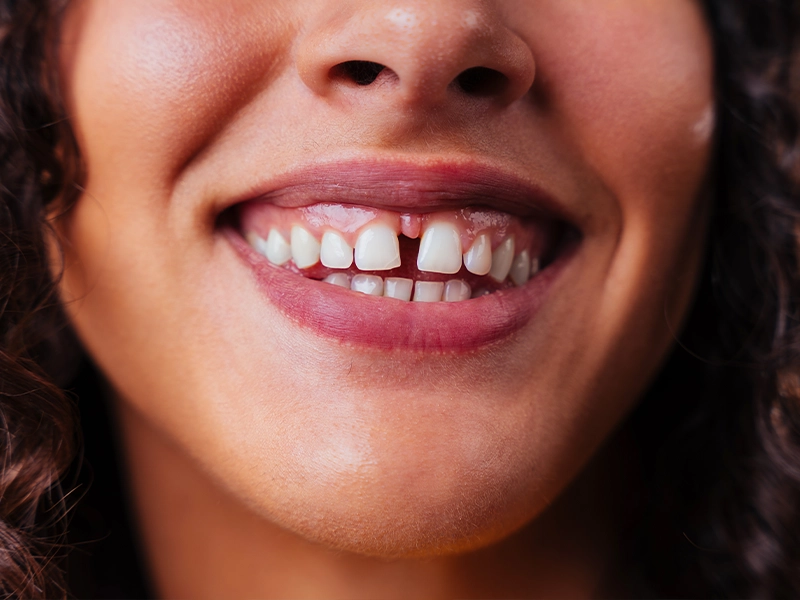
The small, narrow spaces between two teeth are called diastema (separated teeth). This is also known as gap teeth among patients. This problem can stem from many causes. Firstly, it may be due to genetic factors. Secondly, it may be due to gum health problems.
The possibility of developing gaps between teeth at an early age may be due to genetic factors. Whether it runs in family members can be checked. If gaps develop later in life, the patient should have a gum examination, as gum disease is one of the most common causes of this problem. After tooth extraction (tooth loss), gaps can form between teeth because they lose their support from each other.
The most common type of separation occurs in the upper central incisors (our two upper front teeth). These gaps can occur between just two teeth, or in multiple areas throughout the mouth. They can sometimes be found in a single area or in several areas.
Aesthetic concerns arising from diastema can also cause many problems for the patient, such as difficulty chewing and speaking, difficulty expressing themselves, sounds coming from between the teeth or saliva coming out while speaking, the tongue constantly going into the gap and increasing the opening, and problems with self-confidence and the need to hide their smile.
 DİESTEMA TREATMENTİ METHODSİ WHATİR?
There are several treatment options for diastema. These include:
COMPOSITEİT VENNER
This treatment method can be easily applied if the gaps between the teeth are not too large. The gaps between the teeth can be closed with composite filling materials. It is a procedure that can be done in a single session. By minimally or without abrading the tissues on the tooth surface, a natural-looking result is obtained that matches the patient's own tooth color and is indistinguishable from the other teeth in terms of size, shape, and color.
PORCELAIN SLABİNA
This procedure, which can be performed without or with minimal grinding of the tooth, varies from patient to patient and is decided upon by the prosthodontist during the examination. After the examination, before the procedure begins, the position, width, color, and shape of the tooth are noted, measurements are taken, trials are performed, and then the prosthesis is firmly bonded to the tooth surface with special adhesives, resulting in a long-lasting treatment method.
ORTHODONTİK TREATMENTİ
Orthodontic treatment is another permanent treatment method used for teeth that are spaced apart. This process requires a waiting period and patience compared to other treatment methods. The treatment process consists of regular check-ups every month.
There are many options available for orthodontic treatment, including classic orthodontic treatment, cosmetic braces, and clear aligner orthodontics.
TREATMENTİ AFTERWARDS DİATTENTIONİLMESİ REQUIREMENTS
- Avoid biting hard foods with your front teeth.
- Trying to crack hard-shelled and rough-surfaced foods with your teeth.
- Careful attention should be paid to the care taken after consuming coffee, cigarettes, and colored foods and drinks.
If proper dental care is not taken after these procedures, discoloration may occur.
Daily regular oral care and brushing, along with professional dental cleaning and a general check-up every six months or annually, are recommended.